

Strata Fees in Australia (What Owners Need to Know)
We are often asked “Why are strata fees so high in Australia?”
You know, when you open the email… glance at the number… and do a double take.
“Wait… what?”
You’re not alone. Strata fees have a habit of creeping up, and when they do, the first thought is usually the same. How is it this high? Here’s the part most people don’t get told straight away…
Higher strata fees aren’t always a bad thing.
In many cases, they’re what keep a building running properly and help avoid much bigger costs down the track.
So, what’s actually going on behind the scenes? Why are strata fees so high in Australia?
1. Amenities and Services
The more your building offers, the more it costs to keep it running.
Things like lifts, pools, gyms, and shared spaces don’t just look nice, they need constant upkeep.
- Lifts need regular servicing and safety checks
- Pools need cleaning, chemicals, and maintenance
- Common areas need cleaning, repairs, and general upkeep
And if your building has a concierge, on-site manager, or security… that’s wages added into the mix too.
Then there’s fire safety. Not optional. Not negotiable. And definitely not cheap. Fire safety laws require owners corporations to fund these systems properly each year, as outlined by Consumer Affairs Victoria.
2. Age and Type of Building
Buildings are a bit like cars… the older they get, the more attention they need.
Older buildings often come with:
- Plumbing issues
- Roofing repairs
- Concrete or structural maintenance
It all adds up over time.
High-rise buildings also tend to cost more to run than smaller ones. More moving parts, more complexity, more things that need regular attention.
And if there are known issues like leaks or cladding problems, costs can jump quickly.
3. Insurance Costs
This is usually where people get surprised. Insurance is often one of the largest expenses in a strata budget and it’s been climbing across Australia.
Why?
- Extreme weather events
- Higher building and repair costs
- Stricter risk assessments
In Victoria, buildings also need to be revalued every five years to make sure they’re properly covered. Important? Absolutely. But it can push premiums up.
4. Planning Ahead
This is where higher fees can be a good sign. A well-run owners corporation doesn’t just deal with today. It plans for what’s coming.
Things like:
- Repainting the building
- Replacing a roof
- Major upgrades down the track
Instead of hitting owners with a big, unexpected special levy, the costs are spread out over time.
It’s less painful… and a lot less stressful.
So… Are High Strata Fees a Bad Thing?
Not necessarily.
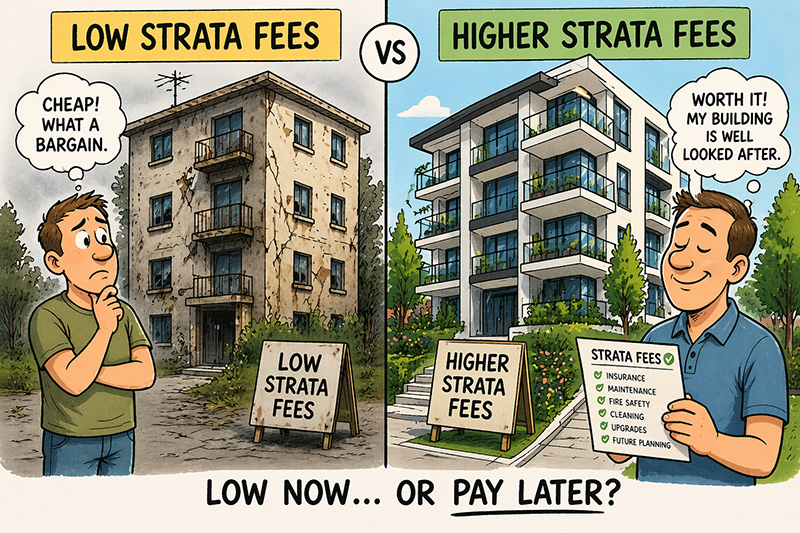
Low fees might look great on paper… but they can sometimes mean:
- Not enough money set aside
- Maintenance being delayed
- Bigger costs waiting down the track
Low now can mean high later.
On the flip side, higher fees often mean the building is being properly looked after and planned for.
Want to Know Where Your Money Is Going?
The best place to start is your AGM (Annual General Meeting).
Yes, we get it… not the most exciting night of the year. But it’s where:
- Owners discuss the budget and set the fees
- The strata manager breaks down the costs
- Decisions are made about your building
If you’re unsure about where your money is going, attending the AGM gives you clarity, and a voice in the decisions being made.
And if the process feels overwhelming, having the right support can make a big difference. A good strata manager will guide the meeting, explain the numbers clearly, and help keep everything on track.
Final Thought
Strata fees aren’t just a bill. They’re what keep your building safe, maintained, and protected long-term. Understanding them won’t make the number smaller… but it will make it make a whole lot more sense.
Frequently Asked Questions About Strata Fees
Why do strata fees keep going up every year?
Strata fees can increase for a few reasons. Rising insurance costs, inflation, ongoing maintenance, and planning for future repairs. Even if nothing major has happened, the cost of running a building rarely stays the same.
What exactly do strata fees cover?
Strata fees typically cover things like building insurance, maintenance, cleaning of common areas, gardening, repairs, and essential compliance costs like fire safety. Basically, anything needed to keep the shared parts of the property running properly.
Can strata fees be reduced?
Sometimes. But do it carefully. Sure, you can review costs and renegotiate contracts, but cut too much, and it often comes back to bite later. Lower fees might feel good now, but they can mean higher costs down the track.
Are high strata fees a red flag?
Not always. Higher fees often mean things are being looked after properly and future costs are planned for. Low fees can sometimes be the bigger risk if not enough is being put aside.
What happens if there isn’t enough money in the strata fund?
If the fund falls short, owners may need to pay a special levy to cover unexpected or major expenses. These can be significant, which is why many buildings aim to build up funds gradually instead.
Do I have a say in how strata fees are set?
Yes….. and this is something a lot of owners don’t realise. Fees are discussed and approved at the AGM, so attending gives you the opportunity to understand the budget and have a say in decisions.