
Can an Owners Corporation Refuse Pets in Victoria?
In short, no. An Owners Corporation cannot refuse pets outright in Victoria, and it cannot impose a blanket ban on animals in the building. The law and VCAT have made it clear that a rule simply stating “no pets” is generally unreasonable and unenforceable.
That said, this does not mean anything goes. An Owners Corporation still has real powers when it comes to how pets are kept, and owners still have genuine responsibilities. Here is where the line sits.
What an Owners Corporation Can Do
An Owners Corporation can make and enforce reasonable rules about pets. These rules typically:
- require pets not to create a nuisance, such as excessive barking, aggression or fouling common property
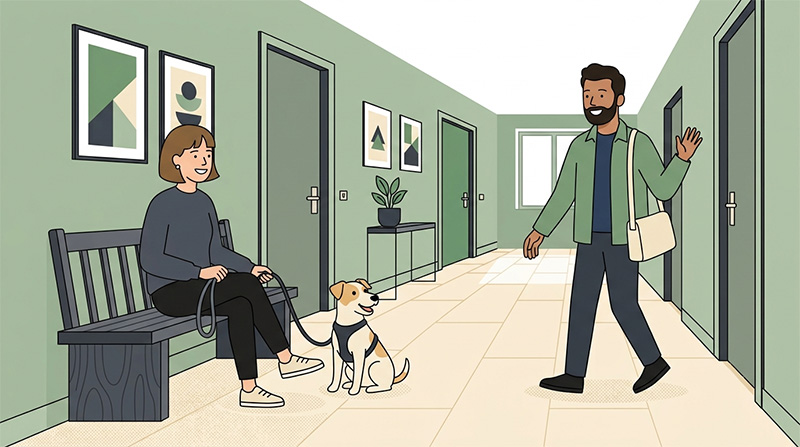
- require pets to be on a lead or carried while on common property
- require owners to clean up after their pets
- prohibit pets that are dangerous or not lawfully kept under council or State laws
- allow the Owners Corporation to take action where a particular animal is causing damage, creating a hazard, or unreasonably interfering with other residents’ use and enjoyment of the property
The common thread is behaviour. Rules that focus on how an animal is kept, rather than whether an animal exists at all, are the ones that hold up.
What an Owners Corporation Cannot Do
An Owners Corporation should not:
- prohibit all pets regardless of their type or behaviour
- require every pet owner to obtain discretionary approval, where that approval can be refused without reasonable grounds
- enforce rules that are arbitrary, discriminatory or unreasonable
If your Owners Corporation has an old “no pets” rule still sitting in its records, it is worth knowing that such a rule is unlikely to be enforceable, even if it has been there for years.
Why the Rules Work This Way
The reasoning is about balance. Pets are part of normal life for a great many Australians, and apartment living is now the norm for a large share of Victorians. A rule that bans animals entirely removes a significant freedom from every owner in the building, regardless of whether any harm is actually being caused.
What the law protects instead is everyone’s right to quiet enjoyment of their home. That is why the focus falls on nuisance and behaviour. A well-behaved cat in a top floor apartment affects nobody. A dog barking through the night affects everybody. The rules are designed to deal with the second situation without punishing the first.
What Happens When There Is a Dispute
Most pet disagreements in Owners Corporations come down to behaviour, not the pet itself.
The first step is usually a conversation. The Owners Corporation raises the concern with the owner and asks them to address it, and in many cases that resolves the matter. If it does not, the Owners Corporation can issue a formal breach notice requiring the owner to comply with the rules.
Where the issue still cannot be resolved, either party can apply to the Victorian Civil and Administrative Tribunal. VCAT will look at the facts of the situation and consider whether the animal is genuinely causing a nuisance. It is worth noting that VCAT tends to focus on the behaviour of the animal and the conduct of the owner, not on the existence of the pet.
Practical Tips for Pet Owners
If you are bringing a pet into a strata property, a little preparation prevents most problems:
- read your Owners Corporation rules before you commit to a pet
- keep your pet under control on common property at all times
- be proactive about noise, mess and your neighbours’ comfort
- speak to your neighbours early if you think there might be an issue
- keep any agreements or approvals in writing
Being a considerate pet owner is the single best way to avoid a dispute in the first place.
A Note for Committees
If you sit on a committee, it is worth reviewing your rules to make sure they reflect the current position. Rules attempting to ban pets outright create risk for the Owners Corporation and rarely survive a challenge.
A clearer and fairer approach is to write rules focused on responsible pet ownership. These are enforceable, they are defensible, and they treat every owner consistently.
If you are not sure whether your current rules are compliant, a professional Owners Corporation manager can review them and bring them into line.
FAQs
Can an Owners Corporation refuse pets in Victoria?
No. An Owners Corporation cannot impose a blanket ban on pets. The law and VCAT have made it clear that a rule simply stating “no pets” is generally unreasonable and unenforceable. An Owners Corporation can, however, set reasonable rules about how pets are kept.
Do I need approval to keep a pet in my apartment?
An Owners Corporation cannot require discretionary approval that can be refused without reasonable grounds. You are expected to follow the rules about keeping your pet under control and not causing a nuisance, so it is always worth checking your specific rules first.
What can I do if a neighbour’s pet is causing problems?
Raise it with your Owners Corporation. The committee can speak with the owner and, if necessary, issue a breach notice. If the problem continues, the matter can be taken to VCAT, which will consider whether the animal is genuinely causing a nuisance.
Can my Owners Corporation make me remove my pet?
Only with reasonable grounds and proper process. An Owners Corporation cannot order a pet removed simply because an old rule says no pets. There would need to be a genuine, unresolved issue such as damage, danger or ongoing nuisance, and the matter may ultimately be decided by VCAT.
What rules can an Owners Corporation make about pets on common property?
Reasonable ones. An Owners Corporation can require pets to be on a lead or carried on common property, require owners to clean up after their pets, and require that animals do not create a nuisance or hazard for other residents.
This article provides general information only and is not legal advice. For advice specific to your situation, contact a qualified professional or Consumer Affairs Victoria.